
Western Brainhack brings together researchers and trainees of all backgrounds to collaborate on open science projects in neuroimaging and neuroscience.
Pitch your project
Learn new skills
Hack!!
Brainhack Western 2026 is an official satellite event of Brainhack Global
Cost: $5
Includes on-site meals, snacks, and coffee!

Schedule
Friday, March 27
Welcome & Opening
WIRB 1170
Project Pitches
WIRB 1170
Linking structural and functional brain patterns to quantify how the early environment shapes the developing brain
WIRB 1170
more info
Developing neuro-technology using computational neuroscience methods
WIRB 1170
more info
Networking & Dinner
The Grad Club
Hack Time
Hacking Spaces
Saturday, March 28
Breakfast
WIRB 4190 (Lunchroom)
Hack Time
Hacking Spaces
Introduction to fNIRS
WIRB 1160
more info
Open Science: Pre-registration
WIRB 4190 (Lunchroom)
more info
Lunch
WIRB 4190 (Lunchroom)
Hack Time
Hacking Spaces
Introduction to Neuroanatomy for Researchers
WIRB 4190 (Lunchroom)
more info
Representational Similarity Analysis (RSA)
WIRB 4190 (Lunchroom)
more info
HippUnfold Tutorial
WIRB 1130
more info
Open Science: Research Code Management (Git)
WIRB 1170
more info
Dinner
WIRB 4190 (Lunchroom)
Hack Time
Hacking Spaces
Sunday, March 29
Breakfast
WIRB 4190 (Lunchroom)
Hack Time
Hacking Spaces
Bayesian Inference in Psychology and Neuroscience
WIRB 1170
more info
Data Collection: Best Practices
WIRB 1170
more info
Lunch
WIRB 4190 (Lunchroom)
Hack Time
Hacking Spaces
Deep Learning for Neuroimaging using MONAI
WIRB 1170
more info
Print Your Brain (And Lab Setup!): A 3D Printing Workshop
WIRB 1170
more info
Open Science: Reproducible Data Analysis (Snakemake)
WIRB 1170
more info
Project presentations
WIRB 1170
Wrap up & Closing
WIRB 1170
Invited Speakers
Linking structural and functional brain patterns to quantify how the early environment shapes the developing brain
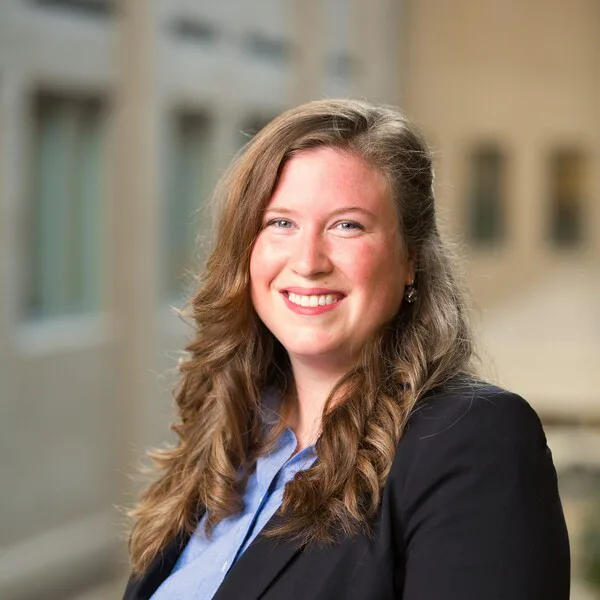
Dr. Kathryn Manning is a Scientist in the Neurosciences & Mental Health and Translational Medicine programs at the Hospital for Sick Children and an Assistant Professor in the Department of Medical Biophysics. She uses advanced MRI analyses to understand infant and child brain development, what factors shape trajectories, and how targeted interventions can promote resilience.
Developing neuro-technology using computational neuroscience methods
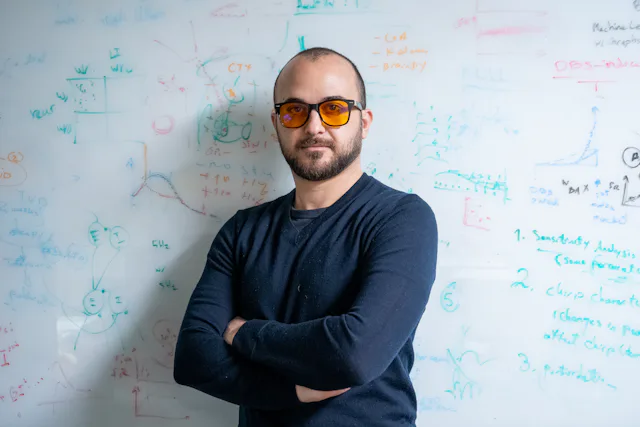
Dr. Lankarany is a Senior Scientist at the Krembil Brain Institute, working in the fields of computational neuroscience, artificial intelligence, and deep brain stimulation. His research focuses on two main areas: (1) understanding the biophysical and computational mechanisms of neural information processing at cellular and network levels, and (2) developing neurotechnology to better understand, monitor, and treat diseases caused by abnormal information processing. His work has the potential to advance treatments for common neurological conditions such as Parkinson's disease and epilepsy. He has extensive experience developing biologically realistic neuronal models for different brain regions. Dr. Lankarany received his PhD in Electrical and Computer Engineering and completed three years of postdoctoral studies in theoretical and computational neuroscience at the Hospital for Sick Children in Toronto. Before joining the Krembil Brain Institute and the University of Toronto in 2019, he worked as a Data Scientist at Myant Inc, a wearable-tech company in Toronto.
Tutorials
Representational Similarity Analysis (RSA)

Representational similarity analysis uses the relationship of brain activation patterns to learn something about the representations in different brain regions. In this workshop, we will provide a overview of the critical choices you have to make in this analysis, highlight some common pitfalls and present some state of the art approaches with examples from the RSA toolbox (https😕/rsatoolbox.readthedocs.io/en/stable/).
Bayesian Inference in Psychology and Neuroscience
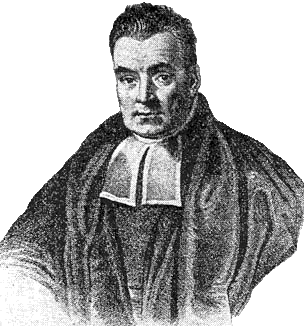
The workshop will cover the conceptual foundations of Bayesian estimation and hypothesis testing. I will step through the application of these methods to basic behavioural and functional neuroimaging data.
Introduction to fNIRS
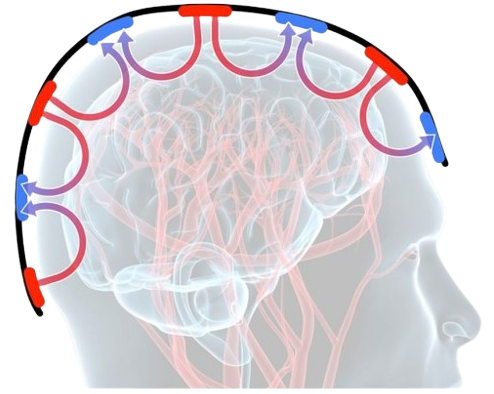
Participants will gain a practical understanding of functional near-infrared spectroscopy (fNIRS), including system setup and live demonstration, core principles, key considerations in experimental design, data handling and preprocessing, and an overview of current applications.
Introduction to Neuroanatomy for Researchers
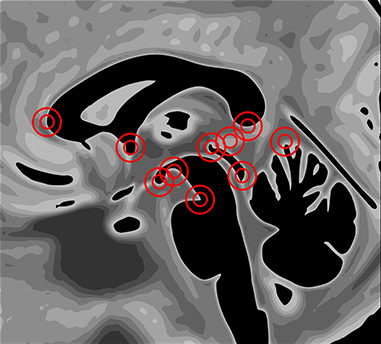
This tutorial offers an interactive dive into neuroanatomy through a clinical case, with a focus on subcortical regions of interest. Participants will gain hands-on experience with segmentation tools like ITK-SNAP and learn to visualize subcortical structures using ultra-high field MRI. No previous experience with ITK-SNAP is required (http😕/www.itksnap.org/pmwiki/pmwiki.php?n😄ownloads.SNAP4)
Open Science: Pre-registration

This hands-on workshop introduces the fundamentals of preregistration, offers guided practice using a customizable OSF template, and includes opportunities for attendees to bring their own research protocols for peer feedback and refinement. It also covers how to manage protocol changes after publishing a preregistration, ensuring participants leave confident using this flexible tool to make their research more transparent and reproducible.
Open Science: Research Code Management (Git)

This tutorial will cover best practices for managing research code with the ultimate goal of sharing it. Aspects of Git and GitHub, including version control, branching, collaborations, etc. will be covered.
Open Science: Reproducible Data Analysis (Snakemake)
Using a workflow management tool to run your research analyses can make it much easier to remember what you've done with your data, make small adjustments, and describe your analyses to others in a reproducible way. In this tutorial, you'll learn about what a workflow management tool is, why you might want to use one, and how to write your analyses as workflows. As an example, we'll go over SnakeBIDS, a Western-grown workflow management tool for handling BIDS-formatted neuroimaging data.
HippUnfold Tutorial
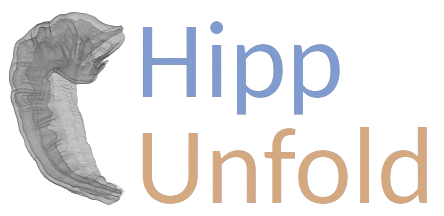
HippUnfold is a toolbox for automatically modeling the topological folding structure of the human hippocampus. This session will introduce its key features, including running HippUnfold, exploring volumetric and surface-based outputs, and integrating results with tools like ITK-SNAP and Connectome Workbench. We will also discuss applications to structural, fMRI, and dMRI data. No prior experience with HippUnfold is required. Links: https😕/github.com/khanlab/hippunfold
Deep Learning for Neuroimaging using MONAI
A practical, no-theory guide to training deep learning models on neuroimaging data with zero experience. This tutorial covers MONAI, the leading AI framework for medical imaging, simplifying tasks like segmentation and classification. With pre-trained models, automated pipelines, and MONAI Zoo, you’ll apply deep learning to neuroscience research effortlessly—Python experience is required. Requirements: Create an account on Kaggle and validate using your phone number (to be able to access free GPUs).
Print Your Brain (And Lab Setup!): A 3D Printing Workshop
Many experiments require rapid prototyping for custom lab setups. While the classic “tape and spare parts” method works in a pinch, 3D printing offers a faster, more precise, and far more robust alternative. In this workshop, we’ll cover the essentials of 3D printing technologies and materials, followed by a hands-on tutorial using free, browser-based 3D design software. As a bonus, you’ll also learn how to transform your own structural MRI data into a custom 3D-printable model!
Data Collection: Best Practices
This workshop centers around the best practices in the approach and conduct of data collection. This will include ethical considerations, how to effectively recruit participants and reduce attrition, improve your communication skills, and how these practices can make you a better researcher.
Sponsors